The government continues to strengthen public safety across Ontario by improving border security, keeping dangerous offenders off the streets and protecting communities. This includes disrupting illegal border crossings and cross-border trafficking in guns and drugs, keeping criminals behind bars and investing in measures to deter and combat illicit activities.
Ontario is advancing its plan to create a strong, modern justice system and increase capacity by making targeted, multi-ministry investments across community safety and policing, courts and correctional services.
The government is fighting for the safety and well‑being of children, families and communities across Ontario. This is why Ontario is making investments to enhance safety in schools and protect public spaces.
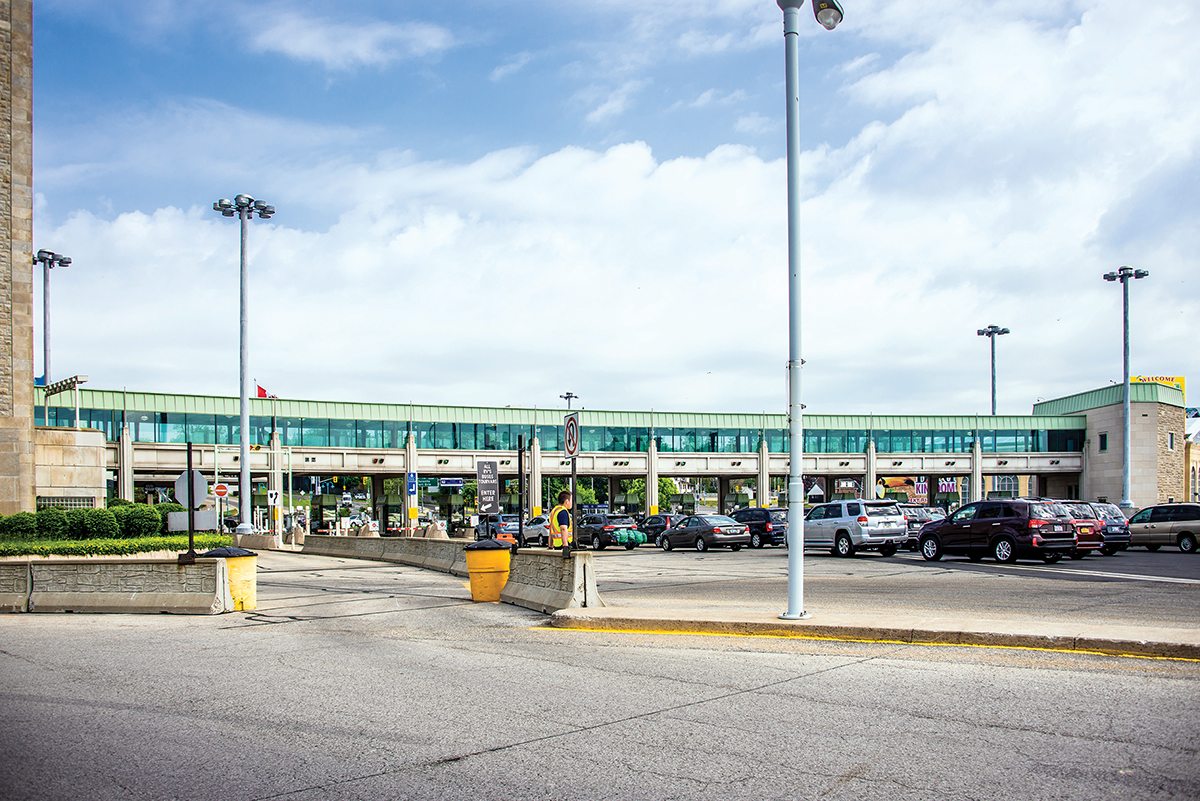
Protecting Ontario’s Borders
The government is continuing to enhance the security of the Ontario–United States border at all points of entry and deter and prevent illegal crossings by land, air and water. These efforts are focused on protecting communities and disrupting cross-border criminal activity, such as the smuggling of illegal drugs and firearms into Ontario.
In January 2025, Ontario launched Operation Deterrence to enhance security at the border and address criminal activity affecting communities on both sides of the border. Since this launch, Ontario’s enhanced border enforcement measures have resulted in the tracing of over 550 illegal firearms, of which over 440 were traced to the United States, the seizure of 4,152 kilograms of cocaine and 192 kilograms of fentanyl and 641 charges laid through Ontario Provincial Police (OPP) border-related patrols.
Building on these results, the province is expanding Operation Deterrence to involve and further integrate local police services in border protection and security. Under Operation Deterrence 2.0, Ontario is investing $32.5 million in 2026–27 to:
- Establish both the Border Security Grant to enable municipal and First Nations police services to acquire specialized assets, such as drones, marine vessels and surveillance technologies; and
- Establish the Border Integrity Investigation Fund to provide targeted operational funding to police services to address border‑related enforcement gaps, with an emphasis on unmonitored general aviation fields and other vulnerable entry points.
These measures will enhance investigations, intelligence gathering and interdiction operations. They will also expand border policing capacity and help disrupt organized crime networks from operating across the border.
Strengthening Ontario’s Bail System to Protect Communities
The people of Ontario deserve the peace of mind that comes with safe communities and a justice system they can trust. For years, Ontario has put forward many tough-on-crime recommendations for the federal government, including initiatives aimed at fixing a bail system that all too often leaves victims, families and communities at risk. In October 2025, the federal government introduced legislation that enables consecutive sentences for specified violent crimes, expands reverse-onus bail and makes bail harder to obtain for violent and repeat offenders. Ontario will continue advocating for federal Criminal Code and bail reform to keep communities safe.
Ontario is advancing its own comprehensive bail reform strategy that puts accountability and public safety first, while supporting a justice system that is efficient and fair. The Keeping Criminals Behind Bars Act, 2025 will require accused individuals or their surety to provide a cash security deposit equal to the full, court-ordered amount once the accused person is released from custody. This change will make it easier for the province to collect forfeited bail payments when bail conditions are violated, ensuring that bail is both meaningful and enforceable.
To enhance enforcement and improve oversight, Ontario is exploring new digital tools, including a centralized surety database, to improve efficiency, increase public safety and strengthen information sharing between police services and prosecutors. The province is also expanding specialized bail prosecution teams that work directly with police to build strong cases for bail hearings involving serious offences. Since 2023, these teams have managed over 4,600 serious violent cases, helping prevent dangerous individuals from being released back into the community.
These measures build on Ontario’s ongoing investments to prevent repeat and violent offenders from committing crimes while out on bail. Through an additional investment of $8.3 million in the Bail Compliance and Warrant Apprehension Grant program in 2026–27, the government continues to support police services in ensuring that high-risk, repeat and violent offenders comply with their bail conditions.
The government is ensuring that adult offenders and accused individuals required to wear a court-mandated GPS ankle monitor, as a condition of release, are held accountable for related costs through a new GPS user fee model. The fees collected will be used to support victim services. The government is also strengthening the GPS ankle monitoring program by exploring options to increase police access to GPS information for the purpose of monitoring people who are accused or convicted of a crime.
These measures underscore Ontario’s commitment to keeping communities safe, supporting law enforcement and holding offenders accountable.
Building More Provincial Jails
The government is expanding the capacity of the adult correctional system, including readiness for future needs associated with the recent bail reforms. This includes adding more space to existing facilities to optimize capacity where feasible, alongside building new facilities and inmate housing, to meet forecasted demand.
In March 2025, the government repurposed and reopened the Regional Intermittent Centre at the Elgin-Middlesex Detention Centre, adding 74 staffing resources, including correctional officers, to accommodate an additional 110 inmates and plans to expand space for programming. The government plans to reopen the Toronto Intermittent Centre at the Toronto South Detention Centre in 2026 to increase detention capacity for 320 inmates and add 166 staffing resources, including correctional officers. The government is also targeting substantial completion of the new Thunder Bay Correctional Complex in late 2026 to increase capacity for at least 345 inmates, once the facility becomes operational in 2027.
The government continues to further expand the capacity of provincial jails. This includes:
- Adding capacity for 91 inmates at the Quinte Detention Centre, bringing detention capacity to over 300 at the facility;
- Constructing the new Eastern Ontario Correctional Complex, which will be able to accommodate 235 inmates;
- Building new modular facilities in Niagara, Milton and Sudbury, each of which can accommodate at least 50 inmates; and
- Increasing capacity for 295 inmates by building the new Brockville Correctional Complex and expanding the St. Lawrence Valley Correctional and Treatment Centre.
The government is also hiring over 700 more staffing resources, including correctional officers, nurses and support staff, to manage the increased correctional capacity. This will help frontline staff to do their jobs safely and effectively and keep violent and repeat offenders off the streets.
To further enhance detention capacity in correctional institutions, the government is moving forward with plans to optimize existing adult correctional institutions by adding more inmate accommodations and staff. The government will never choose to let a violent offender walk free due to capacity constraints.
Getting More Boots on the Ground by Making It Easier to Recruit and Train Police Officers
There is a growing need for police officers across the province to keep our communities safe. This is why the Ontario government is extending the removal of tuition fees for the Basic Constable Training program at the Ontario Police College for an additional three years to support police services in their efforts to recruit and train more officers.
By covering 100 per cent of tuition costs for Basic Constable Training, the government is making the path to becoming a police officer more accessible than ever. This approach helps remove financial barriers for prospective recruits and supports police services as they work to expand their frontline capacity. Since the introduction of the Basic Constable Training tuition fee waiver in 2023, 6,277 recruits have been trained.
The elimination of tuition fees underscores the government’s commitment to strengthening public safety, putting more boots on the ground and supporting the development of highly trained and responsive police services.

Modernizing Police Training Facilities
In 2025, the government committed over $1 billion towards renovating and expanding the Ontario Police College in Aylmer and a new Ontario Provincial Police Academy in Orillia to ensure that police officers and new recruits have adequate training facilities. The government continues to advance these projects, including expanding the Ontario Police College’s capacity to accommodate additional recruits and replacing aging infrastructure at the Huronia Regional Centre, to support the future Ontario Provincial Police Academy.
These facilities will equip new recruits and current police personnel with the skills needed to respond to the increasing complexity of contemporary policing and address urgent specialized training demands driven by rising crime.
Supporting Police Services in First Nation Communities
The province continues to work with First Nation communities to strengthen First Nations police services and ensure access to reliable and culturally responsive policing.
In December 2024, the government announced a $514 million investment to support the Nishnawbe Aski Police Services Board (NAPSB) as it became the first-ever First Nations police service board constituted under the Community Safety and Policing Act, 2019. This investment supports the NAPSB’s efforts to provide culturally appropriate and effective policing delivered under a provincial legislative framework for 34 remote and Northern First Nation communities.
Through ongoing collaboration with First Nations partners and the federal government under the First Nations and Inuit Policing Program, the province is also advancing cost-shared efforts to support equitable resourcing for police services, and investing in policing infrastructure and support initiatives aimed at combatting illicit drugs in First Nation communities.
The province is supporting First Nations Police Services across Ontario, in continued partnership with the Indigenous Police Chiefs of Ontario, First Nation leadership and continues to call on the federal government for further support, so that these services have the resources and stability needed to provide effective and culturally responsive policing to First Nation communities across the province.
Fighting Guns, Gangs and Violence
Gang members are criminals who put the lives of the people of Ontario at risk. A variety of crimes are consistently linked to gang activity, including property offences, drug trafficking, fraud, robberies, assaults with weapons, homicides, auto theft and human trafficking.
The government is continuing its partnership with the federal government, which is providing Ontario with $121 million from 2023 to 2028 to fight gun and gang violence. This funding provides resources to prosecutors, the OPP, municipal and First Nations Police Services, community organizations and school boards across the province to help them conduct investigations and undertake measures focused on preventing, monitoring and fighting gun and gang-related violence and organized crime, and assist victims and survivors of sexual assault, domestic violence and human trafficking. Since 2018, Ontario, with support from the federal government, has allocated over $375 million under the Guns, Gangs and Violence Reduction Strategy to fund initiatives that deliver strong legal enforcement, prosecution and proactive gang disruption.
This funding is helping keep people safe and criminals off the street. For example, since 2019–20, Ontario’s Guns, Gangs and Violence Reduction Strategy resulted in seizures of over 1,100 firearms, more than 2,900 vehicles and $26 million in currency, resulting in over 22,700 charges.
Tackling Organized Crime
Maintaining public safety is a top priority for the government. Key stakeholders have identified that repeat and violent offenders are the overwhelming perpetrators of organized retail crime. Retail theft orchestrated by organized criminal entities threatens the safety and security of both employees and customers, disrupting business operations. This is why Ontario is working with industry partners in the retail sector to identify strategies to combat organized retail crime. These discussions are important to protect the well-being of frontline workers, ensure Ontario businesses thrive and establish communication channels across jurisdictions. The government will continue to protect the rights of the people of Ontario to work and shop in safety.
Ontario is also increasing safety, supporting customers and improving standards in the towing industry. In June 2020, the province established a towing task force to increase safety and legal enforcement, clarify protections for customers, improve industry standards and consider tougher penalties for violators in response to concerns about violence and organized criminal activity in the industry.
In 2024, Ontario became the first province to require both tow truck drivers and vehicle storage operators to have a certificate to operate, helping protect drivers against fraudulent towing companies. Building on this work, Ontario amended regulations under the Towing and Storage Safety and Enforcement Act to further improve transparency for people and businesses needing a tow. These amendments came into effect in July 2025, and include an updated rate structure for towing services, new record-keeping requirements, as well as enhancements to government oversight. These requirements, along with publicly available maximum rate schedules and operator certification status, provide consumers with clearer information and stronger protections while curbing criminal activity in the industry.
Strengthening Enforcement and Partnerships to Combat Contraband Tobacco
Contraband tobacco in Ontario continues to undermine Ontario’s public health goals, fuel organized crime, weaken the tax system and harm legitimate businesses.
The government is engaging law enforcement, industry, public health and First Nations partners to explore additional opportunities to address contraband tobacco and its links to organized crime. This includes examining options to potentially enhance police authorities under the Tobacco Tax Act.
Ontario is also partnering with federal, provincial and territorial governments to establish a working group to identify tools and approaches to tackle the growing issue of online contraband tobacco sales.
Deterring Financial Crime Through Beneficial Ownership Transparency
Ontario is working towards implementing a Beneficial Ownership Registry in 2027 as part of broader efforts to combat money laundering, protect public safety and support a competitive business environment. A registry would provide timely access to reliable information about beneficial owners, serving as an important tool for law enforcement, regulatory bodies and tax authorities. These efforts will help to advance a coordinated national framework that strengthens Canada’s economic security and resilience against financial crime.
Protecting Public Spaces
The government continues to keep our streets, public parks and transit systems safe for children and families, while improving access to high-quality mental health and addictions care.
Since passing the Safer Streets, Stronger Communities Act, 2024 and the Community Care and Recovery Act, 2024, Homeless and Addiction Recovery Treatment (HART) Hubs have been implemented in communities across Ontario. This includes nine former Consumption and Treatment Services sites that transitioned to HART Hubs. HART Hubs are bringing services to those in Simcoe County, Belleville, Windsor, Lanark County (Lanark, Leeds and Grenville), Orangeville, Lambton County, Renfrew County, Sault Ste. Marie, Sagamok, Benbowopka, Sudbury, Guelph, Toronto, Kitchener-Waterloo, Hamilton, Thunder Bay, Ottawa, Windsor-Essex, Hastings County, Prince Edward County, London, Kenora, Niagara, Oxford County, Dufferin, Brampton, Peterborough and Durham.
HART Hubs reflect regional priorities by connecting people with complex needs to comprehensive treatment and preventive services. These include a range of services to meet local needs, such as primary care, mental health services, addictions care and support, social services and employment supports. HART Hubs will support treatment and recovery for thousands of people each year and add almost 900 supportive housing units to transition hundreds of people who are homeless or at risk of homelessness to more stable, long-term supportive housing.
Ontario continues to support local addictions recovery and treatment programs while working alongside municipal partners and communities to address the open use and distribution of illegal drugs, which continues to contribute to safety challenges in many areas. As the province continues to focus on treatment and recovery, provincial funding for Consumption and Treatment Services is ending for active drug injection sites across the province, initiating a 90-day wind-down period. The province will continue to collaborate with municipalities and community partners to ensure a coordinated wind-down of provincial funding for the drug injection sites, while continuing to advance the HART Hub model, supported by nearly $550 million to deliver comprehensive, recovery focused services across the province.
The government is also proposing changes to the Restricting Public Consumption of Illegal Substances Act, 2025 to allow special constables working on public transit to direct individuals using drugs to stop or leave the public space or face charges. These changes would keep people safe while getting around their communities.
Protecting Children from Sexual Abuse and Exploitation on the Internet
As announced in July 2025, to protect communities, the province renewed its Anti-Human Trafficking Strategy 2025–2030 to enhance collective efforts across government to extend and strengthen initiatives that support survivors, including children and youth and to hold offenders accountable.
The government is continuing to keep children safe through an additional investment of $11 million in 2026–27, to support the Provincial Strategy to Protect Children from Sexual Abuse and Exploitation on the Internet Grant, which targets online child sex crimes, internet luring and pornography. This strategy allows undercover teams of police officers to monitor websites, chat rooms and newsgroups to identify suspected child predators and victims and prevent further victimization. It also helps police investigators work with other agencies and jurisdictions to help apprehend offenders and assist victims.
To hold offenders accountable and support victims of crime, the government is also exploring options to make part of the Ontario Sex Offender and Trafficker Registry publicly available to give the public the information it needs to support safe communities.
Investing in Emergency Services
The government continues strengthening its support of the province’s firefighters, who keep our communities safe. Firefighters are more likely to experience health problems because of exposure to hazardous chemicals. This is why the government increased funding for the Fire Protection Grant in 2025−26, from $10 million to $20 million, to help municipal fire departments expand cancer prevention initiatives, improve responses to lithium-ion battery-related incidents and support critical upgrades such as enhanced broadband and internet connectivity. In 2025–26, all 380 eligible municipalities have been approved for the Fire Protection Grant. The government is maintaining $20 million in enhanced funding for the 2026–27 grant cycle to ensure firefighters on the front lines have the infrastructure and equipment necessary to protect themselves and do their jobs effectively.