The recent escalation of U.S. trade actions, together with ongoing geopolitical tensions and broader economic headwinds, continue to create challenges for workers, families and businesses across Ontario. The government continues to respond quickly to these threats. Since April 2025, it has announced nearly $30 billion in tariff relief and support for workers and businesses, including measures to build long-term economic resiliency and prosperity. This includes a six-month interest and penalty-free deferral period from April 1 to October 1, 2025, for select provincially administered taxes, making up to $9 billion in liquidity relief available to approximately 80,000 businesses to help ease financial pressures. Other measures include the Ontario Together Trade Fund (OTTF) and the Protect Ontario Financing Program (POFP), which are helping to protect jobs, support investment and maintain economic stability during this period of heightened uncertainty. In response to the U.S. government’s latest actions to increase tariffs and impose bans on imports from Canada, the government is expanding eligibility for the OTTF and POFP to provide businesses with the critical support to keep their doors open, keep workers on the job and reshore their supply chains.
Protecting workers, businesses and communities is part of the government’s plan to fortify its industrial base to help build and protect the economy from uncertainty. This plan is not just protecting workers in tariff impacted sectors. It is transforming these sectors to be the foundation for Ontario’s future growth, with Ontario’s manufacturing expertise driving the jobs of the future in energy, defence, artificial intelligence and more.
Defending Ontario’s Auto and Steel Industries
The government is supporting Ontario’s auto and steel industries, which continue to face economic challenges associated with U.S. trade actions. In October 2026, the governments of Canada and Ontario jointly announced a multi-billion-dollar package of measures to support these industries and fortify them to be more competitive, diversified and resilient in the long term. The steel sector support will drive investments by the industry to help diversify production and shift to non-U.S. markets. The auto sector investments will support the industry on the pathway to produce electrified and connected vehicles. These measures will preserve and grow strategic industrial capabilities in Canada and Ontario and build a sovereign and strong economy for today and the future.
This timely support is critical, as the steel sector has experienced reduced demand for its exports to the United States, leading to declines in production and layoffs. In the first eight months of 2026, exports of steel products to the United States totalled $4.1 billion, compared to $8.4 billion over the same period in 2024, a decline of 50.6 per cent. Similarly, exports of automobiles to the United States declined 13.7 per cent to $34.5 billion, compared to $39.9 billion over the same period in 2024.
These sectors are key parts of Ontario’s economy, with the auto sector employing more than 100,000 people in 2025 and the steel sector employing over 16,000. Each industry also supports thousands more workers in their broader supply chains. Both are critical to protecting Canadian sovereignty and to realizing the future jobs and economic potential of key emerging industries, including defence, nuclear and advanced manufacturing. In the face of U.S. tariffs and continued economic uncertainty, the government stands firmly behind its supports for the electric vehicle (EV) and battery Auto Pact that helped attract over $46 billion in transformative investments from global automakers, parts suppliers, and manufacturers of EV batteries and battery materials. For example:
- Volkswagen’s PowerCo battery cell plant in St. Thomas, a $7 billion investment, remains one of the largest manufacturing projects in Canadian history and is expected to create thousands of construction and other long-term jobs, reinforcing Ontario’s position as a leading North American hub for electric vehicle and battery supply chain investment. In September 2026, Volkswagen announced that Ontario-based EllisDon had been awarded the general construction contract for its new facility, where construction work is continuing;
- Toyota Motor Manufacturing Canada’s launch of the next-generation hybrid RAV4 in its Woodstock and Cambridge plants. The company’s $1.1 billion investment highlights continued confidence in Ontario’s automotive workforce while keeping the province at the forefront of the North American auto industry; and
- Ford Motor Co., which has operated in Canada for more than a century, is retooling the Oakville Assembly Complex for F-Series Super Duty production, supporting 1,800 direct jobs.
Ontario is also investing in workforce development to support high-paying jobs across the automotive supply chain, including battery and steel production, vehicle assembly, and research and innovation.
Ontario and the federal government have a strong history of successful partnerships to support key sectors in the economy. This includes the Auto Pact established between the governments of Canada and Ontario in 2023 to help attract and secure once-in-a-generation projects in the province’s auto sector. In September 2025, Ontario, in partnership with the federal government, provided $500 million to help Algoma Steel Inc. navigate changing market conditions and the impact of U.S. tariffs targeted at Canada’s steel sector. Through the POFP, the province provided a loan of $100 million, while the federal government provided a loan of $400 million to Algoma Steel through the Large Enterprise Tariff Loan (LETL) facility. Building on the success of these partnerships, Ontario is working with the federal government on additional opportunities to support the auto and steel sectors as the industries continue to face challenges from U.S. trade actions.
Protecting Ontario’s Forest Sector
Ontario is helping the forestry sector remain competitive and resilient. Canada and the United States rely on Ontario forest products to build homes and infrastructure. However, with 97 per cent of Ontario’s forest product exports going to the United States, the unjustified U.S. duties and tariffs pose an immediate threat to workers, businesses and communities.
Outlining the Roadmap to Protecting Ontario’s Forest Sector
Ontario is taking action to protect workers, businesses, families and communities that depend on the province’s forestry sector. In April 2026, the government released A Roadmap to Protecting Ontario’s Forest Sector, a 10-year roadmap that responds to new unprecedented trade pressures faced by the forestry sector by seeking to increase the forest industry’s competitive advantage and unlock new markets. The roadmap is focused on three pillars:
- defending workers, communities and businesses by reducing the impact of unjustified U.S. tariffs and duties;
- adapting the forest sector to be more competitive in the global market while safeguarding the long-term sustainability of Ontario’s forests; and
- growing long-term demand for Ontario’s forestry products by helping the sector develop and commercialize new forest products.
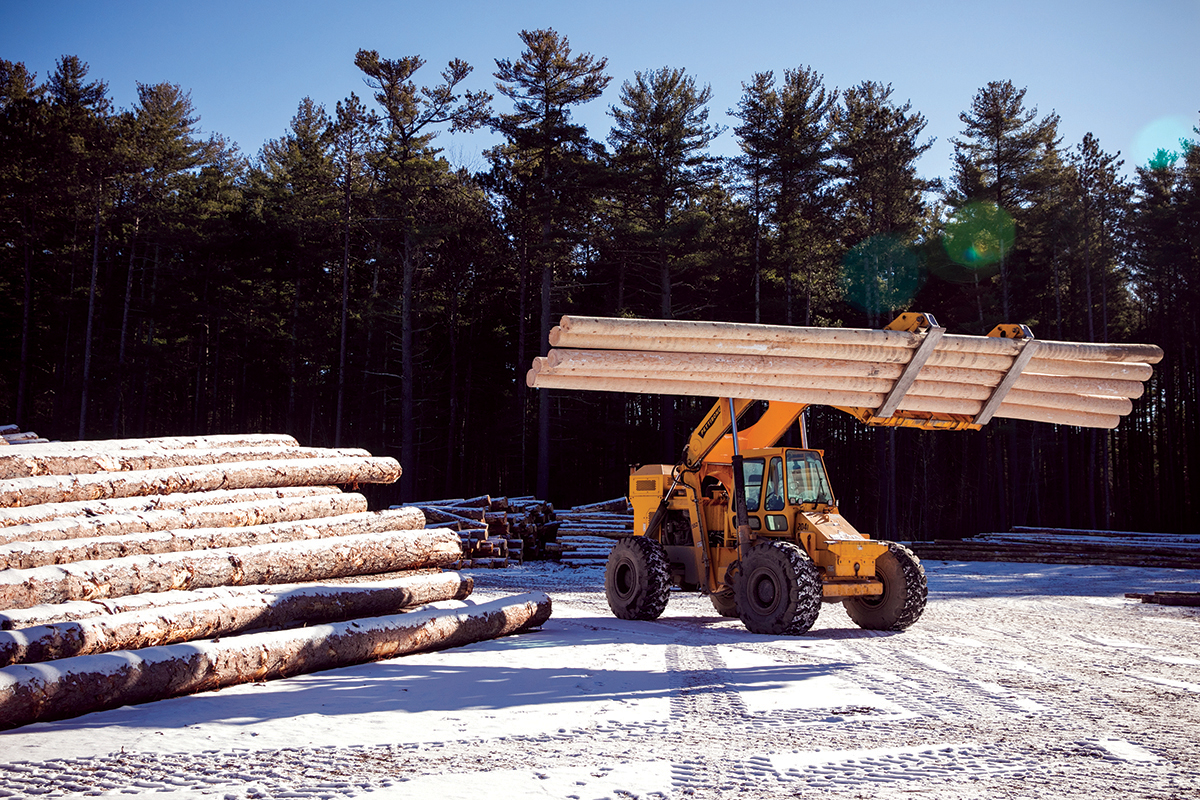
Encouraging the Use of Ontario’s Forest Biomass Resources
To support Ontario’s Forest Biomass Action Plan, the government is investing nearly $20 million each year across four streams in the Ontario Forest Biomass Program to support initiatives that secure and increase long-term wood utilization across the province, with a focus on underutilized species and forest biomass.
Through this program, Ontario supports increasing Indigenous participation in forest biomass, improving public and private understanding, deploying innovative bioproducts, and supporting forest sector transformation in the emerging bioeconomy. Since launching in 2023, the program has committed over $86 million to 74 projects, securing over $279 million in additional external funding and creating more than 115 new jobs.
Strengthening Ontario’s Forest Sector Competitiveness
Ontario’s Forest Sector Investment and Innovation Program (FSIIP) helps bring more made‑in‑Ontario wood products to market by providing financial support. The FSIIP provides funding for strategic investments that improve productivity, increase innovation, support market expansion and strengthen regional economies. To date, the government has invested over $90 million through the program, leveraging $510 million in new investment to help Ontario forestry companies adopt innovative technologies to stay competitive.
Prioritizing Ontario Businesses with the Buy Ontario Act
The Buy Ontario Act (Public Sector Procurement), 2025 is designed to protect Ontario workers and businesses by strengthening domestic procurement across the public sector. The Act strengthens the province’s economic resilience by requiring public-sector entities, including ministries, agencies and designated broader public-sector organizations delivering Ontario’s more than $210 billion 10‑year capital plan, to prioritize Ontario, and then Canadian, goods and services whenever feasible.
In response to escalating U.S. tariffs and ongoing economic uncertainty, the government has been working with municipalities and other public-sector entities to ensure that spending supports local workers, businesses and industries. The Act provides the framework to deliver on the government’s commitment to ensure Ontario tax dollars create economic opportunities at home and support key industries, such as those in the steel, forestry, automotive, agriculture and construction sectors. It also preserves value for taxpayers and helps keep critical infrastructure projects on track.
As a first step under the Act, Ontario introduced directives requiring public-sector entities to prioritize made-in-Ontario vehicles for fleet purchases and Ontario and Canadian goods and services in capital infrastructure procurements. The government is considering measures to monitor compliance and ensure that organizations respect procurement requirements. Consequences for non-compliance could include reconsidering provincial funding made available to the public sector as well as other measures permitted under the legislation. Looking ahead, the government is exploring additional opportunities to expand and accelerate domestic procurement, protect jobs, and maximize the economic benefits of public-sector spending. This includes extending the Building Ontario Businesses Initiative (BOBI) to municipalities, enabling Ontario businesses to compete more effectively for municipal, provincial and broader public-sector procurement opportunities.
The government is also strengthening Buy Ontario policies so that infrastructure projects are planned and designed in a manner that maximizes inputs from Ontario and Canadian goods and workers, while maintaining flexibility, value for money and efficient project delivery.
In addition, the government is taking steps to strengthen Ontario’s domestic capacity and reduce reliance on foreign supply chains. This includes advancing bulk purchasing initiatives that list Ontario and Canadian suppliers to increase their participation in provincial procurement processes and create more opportunities for local businesses and workers across the province.
These measures reflect the need for public procurement to support not only value for money, but also Ontario’s economic security, public safety, supply chain resilience, critical infrastructure protection, and continuity of public services in an increasingly uncertain global environment.
Supporting Tariff-Impacted Workers with POWER Centres
Ontario is continuing to support workers in the face of economic uncertainty through the Protect Ontario Workers Employment Response (POWER) Centres. The POWER Centres provide transition assistance for workers affected by layoffs, including targeted training referrals and access to Employment Ontario programs, through partnerships with employers, unions, community organizations, municipalities, colleges and universities. The centres are typically set up by unions, employee or employer associations or municipalities, and can be launched proactively before a layoff has occurred. Currently, there are 12 POWER Centres operating across Ontario, helping over 27,000 workers with services and supports. The Canada–Ontario Tariff Response Initiative provided funding and cooperation to support POWER Centres.
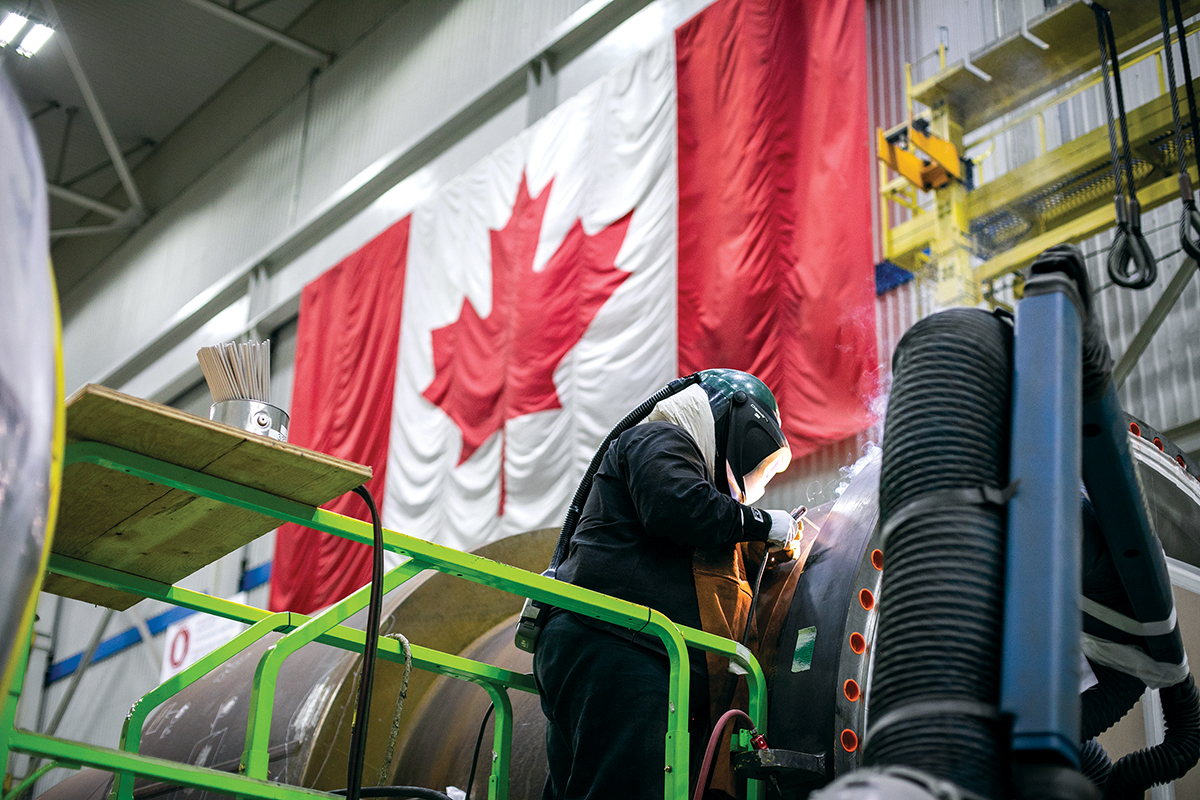
Supporting Businesses Through the Protect Ontario Financing Program
The Protect Ontario Financing Program (POFP) provides up to $1 billion in working capital loans to Ontario-based businesses experiencing tariff-related financial pressures. The program helps businesses manage near-term liquidity needs, while supporting economic stability during a period of ongoing trade uncertainty.
As part of the government’s strategy to protect Ontario’s economy from the impacts of escalating U.S. trade measures in September 2026, the province expanded eligibility for the POFP in response to newly enacted U.S. tariffs and product bans on a range of Canadian imports.
Trade disruptions and tariffs can create financial uncertainty for Ontario businesses, particularly small and medium-sized enterprises, threatening jobs, investment and economic activity across the province. To help protect workers, support businesses and maintain economic stability, the expansion ensures companies affected by the new tariffs, as well as those facing existing tariffs on steel, aluminum, copper and automotives, have access to timely financial support as they navigate ongoing trade-related challenges.
The program is being delivered with strong oversight and a commitment to responsible stewardship of public funds. Continued work in this area remains important as evolving trade conditions and the potential for additional U.S. tariffs could increase financial pressures on Ontario businesses and drive demand for support. Maintaining this capacity will help Ontario protect key industries, preserve jobs and strengthen economic resilience in the face of external shocks.
Investing in Ontario’s Future Economy with the Protect Ontario Account Investment Fund
Global economic conditions remain dynamic and highly uncertain, and Ontario is taking action to strengthen the province’s economic resilience and position Ontario for long-term growth.
This is why the government has proposed the Protect Ontario Account Investment Fund. The Protect Ontario Account Investment Fund represents an opportunity for provincial capital to attract additional investment from Ontario-based pensions and other major investors to leverage the impact of the province’s investment into support for strategic economic priorities.
The government continues to assess the impacts of U.S. tariffs and protectionist policies to determine how to advance Ontario’s strategic economic priorities for the benefit of all the people of Ontario. In this context, the Protect Ontario Account Investment Fund is part of a broader Ontario-pioneered solution and will focus on how to best address this challenging trade environment. Ontario will continue efforts to align this strategy with other policy and investment initiatives and is exploring all options to better support impacted workers and communities.
Helping Ontario Businesses Pivot and Expand to New Markets
U.S. tariffs continue to have an impact on many Ontario businesses. In the 2025 Budget, Ontario announced the creation of the Ontario Together Trade Fund (OTTF). This $150 million fund provides financial support to help businesses with near-term investments so they can serve more interprovincial customers, develop new international markets and reshore critical supply chains.
In September 2026, Ontario expanded eligibility for the OTTF in response to U.S. measures aimed at Canadian exports to the United States, including the imposition of additional 50 per cent tariffs and import bans on certain Canadian goods. The OTTF was expanded to include businesses producing the following exports covered by the U.S. trade actions: certain steel, aluminum and other metal products; mattresses, furniture, paper products, motorboats and golf carts; certain dairy and specialty cheese products; and select animal skins and leather products.
To date, the OTTF has supported 90 companies, whose projects amount to nearly $1 billion in total investments that will protect and create more than 10,000 jobs across the province.
Helping Communities and Local Industries Respond to Trade Disruptions
The province is continuing to strengthen the economic resiliency of communities and industries disproportionately impacted by trade disruptions through the Trade-Impacted Communities Program (TICP). The TICP is a $40 million program supporting local projects that enhance competitiveness, diversify supply chains and navigate new export partnerships. The program offers support to municipal governments, economic development organizations, business accelerators and incubators, as well as sector or industry associations. To date, the government has announced $8 million of investments into 10 projects across the province.